Tag: travel

  • Where to Stay in Aguas Calientes: Best Areas, Hotels and Tips for Machu Picchu

    Where to Stay in Aguas Calientes: Best Areas, Hotels and Tips for Machu Picchu

    Aguas Calientes, officially called Machu Picchu Pueblo, is the small town at the foot of Machu Picchu where every train, every trek and every shuttle bus meets. Squeezed into a narrow gorge between rushing rivers and green cliffs, it is a place of hotels, restaurants, hot springs and a lively market, built almost entirely around visitors. Some travelers rush through it on a day trip. Others discover that spending a night here is the secret to a calm, unhurried Machu Picchu visit.

    This guide helps you decide whether to stay overnight, which part of town suits you, what kind of hotel fits your budget and how to book wisely. We also explain the iconic lodges, the budget options and the small details, like noise from the train tracks and luggage limits, that make a big difference to your stay.

    Should You Stay Overnight in Aguas Calientes?

    A day trip from Cusco or the Sacred Valley is possible, but it means early trains, tight connections and only a few hours at the ruins. Sleeping in Aguas Calientes changes the rhythm of the whole experience.

    Reasons to stay overnight

    • Early entry slots. If you want to be inside Machu Picchu early, when the light is soft and crowds are thinner, you must sleep in town. Trains from the valley cannot get you there in time for the first slots.
    • Two visits. A night in town lets you visit on two consecutive days, for example the classic circuit one afternoon and Huayna Picchu the next morning.
    • Last-minute tickets. The in-person ticket office in town sells 1,000 tickets a day for the following day. You can only use this option if you are already there.
    • Less stress. If a train is delayed or a road is blocked, you are still near the ruins.
    • Hot springs and cloud forest. The thermal baths, the butterfly garden and the trails around town are worth an afternoon.

    When a day trip is enough

    If you are short on time, your entry slot is late morning or midday, and you have a reliable train both ways, a day trip works. Many travelers on tight schedules do it and are happy. Just accept a long day that starts before sunrise and ends after dark.

    WHERE TO SLEEP

    Book your room in Cusco & Aguas Calientes

    Thousands of hotels, hostels and boutique stays with free cancellation on most rooms, so you can lock in a bed before Machu Picchu dates sell out.

    CHECK HOTEL DEALS →

    ★★★★★ 28M+ listings · free cancellation on most stays
    Understanding the Layout of Aguas Calientes

    The town is small and walkable. You can cross it on foot in about 15 minutes. Still, each area has its own character.

    Around the train station and market

    The train station sits next to the craft market, and many hotels and restaurants are within a few minutes’ walk. This is the most convenient area if you arrive with luggage or have an early train. It can be busy and noisy during the day.

    Plaza de Armas and Avenida Pachacútec

    The main square, with its church and statue of Pachacuti, is the heart of the town. Avenida Pachacútec climbs uphill from the square toward the hot springs and is lined with restaurants, bars and mid-range hotels. The Ministry of Culture’s ticket office is near the square. Upper Pachacútec is quieter at night.

    Along the railway tracks (Avenida Imperio de los Incas)

    Many hotels and restaurants face the railway line that runs through the middle of town. Rooms here are convenient but can be noisy when trains pass, especially early in the morning. Ask for a room facing away from the tracks.

    Near the river and the bus stop

    The Consettur shuttle buses leave from a stop near the Aguas Calientes River. Hotels along the river are convenient for early buses, and the sound of rushing water drowns out other noise. Some guests love it; light sleepers may want earplugs.

    Outside the town center

    A few upscale properties sit at the edge of town in landscaped cloud forest gardens, offering peace and nature while still being a short walk from the station. At the very top, one lodge sits right next to the entrance of Machu Picchu itself.

    Hotel Types and Prices

    Category Approx. price per night (double) What to expect Best for
    Hostels US$15 – $35 per bed Dorms, shared bathrooms, social atmosphere Backpackers, solo travelers
    Budget hotels US$40 – $80 Simple private rooms, hot water, basic breakfast Travelers who just need a bed
    Mid-range hotels US$90 – $200 Comfortable rooms, good breakfast, some with river views Couples, families
    Boutique and upscale US$250 – $600 Stylish design, restaurants, spa, gardens Special occasions
    Luxury lodge at the ruins US$1,000+ Steps from the entrance, all-inclusive options Once-in-a-lifetime splurge

    Prices in Aguas Calientes are higher than in Cusco for the same quality, because everything has to arrive by train. Rates also rise from June to August and during holidays. Booking early gives you the best choice.

    Iconic Places to Stay

    Belmond Sanctuary Lodge

    The only hotel located right next to the entrance of Machu Picchu, high above the town. Guests can be among the first in line in the morning and stay close to the ruins after day-trippers leave. It is famously expensive and books up far ahead, but for many travelers it is a dream come true.

    Inkaterra Machu Picchu Pueblo Hotel

    A pioneering eco-lodge set in a cloud forest garden at the edge of town, known for its orchid collection, birdwatching walks and stone cottages. It feels secluded while being a short walk from the station.

    Sumaq Machu Picchu Hotel

    A refined hotel along the river with a well-known restaurant, spa and spacious rooms, popular with couples and honeymooners.

    Mid-range favorites

    Dozens of family-run and small chain hotels along Avenida Pachacútec and the river offer good comfort for the price. Look for recent reviews mentioning hot water, heating, breakfast quality and noise. A room with a river view is worth a small premium.

    Hostels

    Aguas Calientes has a handful of lively hostels with dorms and private rooms. They are great for meeting other travelers and often organize early breakfasts for guests with first-slot tickets.

    TOURS & GUIDES

    Skip the stress with a guided Machu Picchu tour

    Licensed guides, train and bus combos and full-day tours from Cusco, with reviews from real travelers and free cancellation on most activities.

    SEE MACHU PICCHU TOURS →

    ★★★★★ Rated by millions of travelers worldwide

    How to Choose the Right Hotel

    Your situation Choose Why
    Early entry slot Hotel near the bus stop Shortest walk to the first shuttles
    Arriving late by train with luggage Hotel near the station No uphill walk at night
    Light sleeper Upper Pachacútec or room away from tracks Less train and street noise
    Honeymoon or celebration Upscale lodge or riverside boutique Gardens, spa and great food
    Arriving from a trek Mid-range with good hot showers You will want comfort after camping
    Tight budget Hostel or budget hotel Save for tickets and train

    Before booking, check three practical details: whether breakfast starts early enough for your entry time (many hotels offer a breakfast box for early departures), whether the room has heating or extra blankets, and whether the hotel stores luggage for free after check-out.

    Things to Do in Aguas Calientes

    Many visitors only see the town on the way to the ruins, but it has enough to fill a relaxed afternoon:

    • Hot springs. The thermal baths at the top of Avenida Pachacútec, which gave the town its name, are perfect after a long hike. Bring a swimsuit and a towel.
    • Manuel Chávez Ballón Site Museum. A small museum near the Puente Ruinas, at the bottom of the road to Machu Picchu, explains the history and archaeology of the site. Its botanical garden is lovely.
    • Butterfly garden. A conservation project near the museum with native butterflies.
    • Mandor waterfalls. A walk along the railway and through a private garden to a quiet waterfall, ideal for birdwatching.
    • Putucusi. A steep climb up ladders on the mountain facing Machu Picchu. Check whether it is open, and only attempt it if you are fit and confident on heights.
    • The market. The craft market near the station sells textiles, ceramics and souvenirs. Prices are a bit higher than in Cusco, so bargain politely.

    MACHU PICCHU EXPERIENCES

    Make the most of your Machu Picchu visit

    2-day trips, Huayna Picchu, Machu Picchu Mountain and private guides: the best Machu Picchu days are the ones you book ahead.

    SEE THE 2-DAY MACHU PICCHU TRIP →

    ★★★★★ Free cancellation on most activities

    Noise, Heating and Hot Water: The Small Things

    Reviews of Aguas Calientes hotels often mention the same three issues. First, noise: trains, rivers and late-night bars all carry in a narrow valley, so earplugs are a smart addition to your bag. Second, heating: nights are cooler than you expect, and not every budget hotel has heaters, so ask for extra blankets. Third, hot water: smaller hotels can run out of hot water when many guests shower at once, particularly after treks. Showering at an off-peak hour solves the problem.

    Eating and Drinking in Town

    Aguas Calientes has hundreds of restaurants, from cheap set lunches to fine dining. Most restaurants on the main streets offer similar international menus with pizza, pasta and Peruvian classics. For better value, look for places where locals eat, near the market, which serve a set menu of soup and main course at a low price. Try trout from the river, quinoa soup, lomo saltado and fresh fruit juices. In the evening, many bars offer happy hours on pisco sours; just remember that early shuttles and alcohol are not great partners.

    Prepare a picnic for after your visit, because food is not allowed inside the citadel and the only restaurant at the entrance is expensive.

    Luggage, Trains and Logistics

    Economy train classes allow only a small backpack or bag per passenger, typically around 5 to 8 kilograms, depending on the operator. Leave your big suitcase in your hotel in Cusco or Ollantaytambo, and pack a small overnight bag for Aguas Calientes. Most hotels in town store luggage for free while you visit the ruins.

    From the train station, all hotels are reachable on foot, and porters with trolleys can help for a small tip. There are no cars in town except service vehicles and the shuttle buses. Our Lima to Machu Picchu guide explains the full route and train schedules, and our tickets guide helps you choose an entry time that fits your hotel stay.

    FLIGHTS TO CUSCO

    Find the cheapest Lima → Cusco fares

    Compare every airline flying into Cusco in seconds, set price alerts and grab the early-morning departures that leave you time to acclimatize.

    COMPARE FLIGHTS →

    ★★★★★ Trusted by 100M+ travelers every month

    Safety and Practical Tips

    • Weather. Aguas Calientes is warm and humid, with frequent showers, especially from November to March. Pack a rain jacket and quick-drying clothes.
    • Insects. Small biting flies are common near the river and in the cloud forest. Use repellent, especially in the afternoon.
    • Cash. There are ATMs in town, but they sometimes run out of cash on busy days. Bring enough soles for the bus, tips, snacks and markets.
    • Health. The town is lower than Cusco, so altitude symptoms usually improve here. Read our altitude guide if you are coming straight from Cusco.
    • Landslides and strikes. In the rainy season and during occasional local protests, train service can be interrupted. Travel insurance that covers delays and extra nights is valuable.

    TRAVEL INSURANCE

    Hike the Andes fully covered

    Medical cover for trips abroad, including emergency care in Peru. Sign up online in minutes, even if you are already on the road.

    GET COVERED NOW →

    ★★★★★ Built for nomads and travelers in 180+ countries

    GEAR WE RECOMMEND

    Lightweight packing cubes

    With strict train luggage limits, compressible packing cubes make it easy to split your bag: one small overnight kit for Aguas Calientes, the rest stored in Cusco.

    See options on Amazon →

    Sample Plans for Your Stay

    One night: arrive in the afternoon, visit early

    Take a midday train from Ollantaytambo and arrive in Aguas Calientes in the early afternoon. Drop your bag at the hotel, walk to the site museum and botanical garden by the river, and finish the day at the hot springs. Have an early dinner and set your alarm. The next morning, catch one of the first shuttles for an early entry slot, explore your circuit with a guide and return to town for lunch before an afternoon train back.

    Two nights: two visits and a mountain

    Arrive in the morning, check in and visit the citadel in the afternoon on a panoramic route, when the light is softer and many day-trippers have left. Spend the second day climbing Huayna Picchu or Machu Picchu Mountain, then relax in town. On the third morning, walk to the Mandor waterfalls or browse the market before your train. It is the most relaxed way to see the site in depth.

    After a trek: recover in comfort

    If you arrive from the Salkantay trek or the Short Inca Trail, book a mid-range hotel with strong hot water and a good bed. Do your laundry, eat a big dinner and get an early night. You will appreciate the comfort before the final day at the ruins.

    Staying in Aguas Calientes with Children

    Families will find the town easy to handle: it is compact, there are no cars and the river and trains fascinate children. Choose a hotel near the station so little legs do not have to climb Avenida Pachacútec with bags. Family rooms and connecting rooms are limited, so book them early. Many restaurants offer simple dishes like pasta, chicken and rice that suit picky eaters. At the ruins, keep children close on the terraces, which have steep drops and no railings. A carrier is more practical than a stroller, which is not allowed inside the citadel.

    Alternatives: Sleeping in Ollantaytambo or the Sacred Valley

    If your entry slot is late morning or later, you can sleep in Ollantaytambo and take an early train. Ollantaytambo is a charming Inca town with cobbled streets, a spectacular fortress and more affordable hotels than Aguas Calientes. It is also lower than Cusco, so it is a good place to acclimatize. Urubamba, a bit farther, has spacious resorts with gardens and mountain views, ideal for families and travelers who want a quiet base.

    A popular combination is two nights in the Sacred Valley, one night in Aguas Calientes and the remaining nights in Cusco at the end of the trip. It balances acclimatization, comfort and sightseeing. If you are visiting in the rainy season, our best time to visit guide explains what to expect.

    Our Top Tips for Booking

    1. Book your Machu Picchu ticket first, then the train, then the hotel, matching your entry time.
    2. Choose free cancellation where possible, so you can adjust if your train changes.
    3. Read recent reviews about hot water, heating and noise.
    4. Ask about early breakfast boxes if you have an early slot.
    5. Confirm luggage storage before you arrive.
    6. Book at least two to three months ahead for June to August.
    7. Save the hotel’s phone or WhatsApp number in case your train is delayed and you arrive late.
    8. Check whether the price includes taxes. Foreign tourists with a passport stamp are usually exempt from Peru’s sales tax on hotel rooms, but only if they show the documents at check-in.

    One last piece of advice: do not over-plan your time in town. Aguas Calientes rewards a slow pace. Sit by the river, watch the clouds roll over the mountains and let the anticipation build before the big day. Many travelers say the quiet evening before Machu Picchu was one of their favorite moments of the whole trip.

    Frequently Asked Questions

    Is it worth staying overnight in Aguas Calientes?

    Yes, if you want an early entry slot, plan two visits, or prefer a relaxed pace. A night in town removes the stress of tight train connections.

    How many nights should I stay in Aguas Calientes?

    One night is enough for most visitors. Two nights work well if you plan to visit Machu Picchu twice or hike Huayna Picchu.

    Where is the best area to stay in Aguas Calientes?

    Near the bus stop for early entries, near the station for late arrivals, and upper Avenida Pachacútec for quieter nights.

    Is there a hotel at Machu Picchu itself?

    Yes, one luxury lodge sits next to the entrance of the citadel. It is very expensive and books up far in advance.

    How much does a hotel in Aguas Calientes cost?

    Hostels start around US$15 to US$35 per bed, budget hotels around US$40 to US$80 and mid-range hotels around US$90 to US$200 per night.

    Can I walk from the train station to my hotel?

    Yes. The town is small and car-free, and all hotels are within walking distance of the station.

    Can I leave my luggage in Aguas Calientes while I visit Machu Picchu?

    Most hotels store luggage for free after check-out. There is also a small paid storage area at the Machu Picchu entrance for bags too large to take inside.

    Is Aguas Calientes safe?

    Generally, yes. It is a small, tourist-focused town. Use normal precautions with valuables and avoid walking along the railway tracks at night.

    Are the hot springs in Aguas Calientes worth it?

    They are simple public pools rather than a luxury spa, but a soak after a long day of hiking is relaxing. Go in the evening and bring a swimsuit and towel.

    Should I stay in Aguas Calientes or Ollantaytambo?

    Stay in Aguas Calientes for early entry or two visits. Stay in Ollantaytambo if your slot is later in the day and you prefer a more charming, less touristy town.

    Conclusion: A Night by the River Makes the Difference

    Aguas Calientes is more than a transit stop. A night in town lets you reach Machu Picchu early, visit twice, recover after a trek and enjoy the cloud forest at your own pace. Choose the area that matches your schedule, book a hotel with free cancellation, pack light for the train and leave time for the hot springs. When you wake up to the sound of the river and catch one of the first buses up the mountain, you will be glad you stayed.

    Ready to book? Compare hotels in Aguas Calientes and lock in your room before your dates fill up.

    WHERE TO SLEEP

    Book your room in Cusco & Aguas Calientes

    Thousands of hotels, hostels and boutique stays with free cancellation on most rooms, so you can lock in a bed before Machu Picchu dates sell out.

    CHECK HOTEL DEALS →

    ★★★★★ 28M+ listings · free cancellation on most stays
  • Altitude Sickness in Cusco and Machu Picchu: How to Prevent It and What to Do

    Altitude Sickness in Cusco and Machu Picchu: How to Prevent It and What to Do

    You step off the plane in Cusco, grab your backpack, walk up a short flight of stairs and suddenly feel as if you have just run a race. Your heart pounds, your head feels tight and you wonder whether something is wrong. Welcome to the Andes. Cusco sits at about 3,400 meters above sea level, and for most visitors arriving from the coast or from abroad, the thin air is the first real challenge of a trip to Machu Picchu.

    The good news is that altitude sickness is predictable, usually mild and largely preventable. With a sensible itinerary and a few simple habits, the vast majority of travelers adapt within a couple of days. This guide explains what happens to your body at altitude, how high each stop on the route really is, how to acclimatize, what helps and what does not, and the warning signs that mean you need medical help. It is general travel information, not medical advice, so if you have a heart or lung condition, are pregnant or take regular medication, talk to your doctor before you travel.

    How High Are Cusco and Machu Picchu?

    Many visitors are surprised to learn that Machu Picchu is lower than Cusco. The citadel sits in a cloud forest valley well below the city, which is why the Sacred Valley and Machu Picchu are often easier on the body than Cusco itself.

    Place Approx. altitude (m) Approx. altitude (ft) How it usually feels
    Lima 0 – 150 0 – 500 Sea level
    Aguas Calientes 2,040 6,700 Mild, warm and humid
    Machu Picchu citadel 2,430 7,970 Mild; stairs feel harder than usual
    Ollantaytambo / Urubamba 2,800 – 2,870 9,200 – 9,400 Noticeable, but easier than Cusco
    Cusco 3,400 11,150 Most visitors feel it on day one
    Inca Trail, Dead Woman’s Pass 4,215 13,830 Strenuous, short stay at the top
    Salkantay Pass 4,600 15,090 Very strenuous, risk of symptoms
    Rainbow Mountain (Vinicunca) 5,000+ 16,400+ Only after good acclimatization

    What Is Altitude Sickness?

    As you go higher, air pressure drops, and each breath delivers less oxygen to your lungs. Your body responds by breathing faster, raising your heart rate and, over days, producing more red blood cells. While it adjusts, you may develop acute mountain sickness, often called AMS or, locally, soroche.

    Common symptoms

    • Headache, often the first sign
    • Tiredness and lack of energy
    • Shortness of breath on exertion
    • Nausea or loss of appetite
    • Dizziness or light-headedness
    • Poor sleep, waking up often during the night

    Symptoms usually appear six to twelve hours after arrival and ease within one to three days as you acclimatize. Anyone can be affected, regardless of age or fitness. Being very fit does not protect you and can even tempt you to push too hard on day one.

    Serious forms that need urgent care

    Rarely, altitude sickness progresses to life-threatening conditions: fluid on the lungs (HAPE) or swelling of the brain (HACE). They are uncommon at Cusco’s altitude but more likely on high treks or when people ascend fast and ignore symptoms. Seek medical help immediately if you or a companion have:

    • Breathlessness at rest, a persistent cough or gurgling breathing
    • Confusion, unusual behavior or extreme drowsiness
    • Loss of coordination, stumbling or being unable to walk in a straight line
    • A severe headache that does not respond to rest and simple painkillers
    • Bluish lips or fingertips

    The single most effective treatment for serious altitude illness is to descend. Cusco has clinics experienced with altitude problems, and many hotels keep oxygen available. Do not wait until morning if symptoms are getting worse.

    TRAVEL INSURANCE

    Hike the Andes fully covered

    Medical cover for trips abroad, including emergency care in Peru. Sign up online in minutes, even if you are already on the road.

    GET COVERED NOW →

    ★★★★★ Built for nomads and travelers in 180+ countries

    The Smart Itinerary: Sleep Low First

    The best prevention is a good plan. Mountaineers follow a simple rule: climb high, sleep low, and ascend gradually. You can apply the same idea to a Machu Picchu trip.

    Instead of spending your first night in Cusco, go straight from the airport to the Sacred Valley, which is several hundred meters lower. Spend one or two nights in Urubamba or Ollantaytambo, visit Machu Picchu, which is lower still, and only then return to Cusco for sightseeing at the end of your trip. By the time you sleep at 3,400 meters, your body has had several days to adjust. Our Lima to Machu Picchu route guide includes a sample itinerary built on this principle.

    Day Classic plan (harder) Sleep-low plan (easier)
    1 Fly to Cusco, sleep at 3,400 m Fly to Cusco, transfer to Sacred Valley, sleep at ~2,850 m
    2 Cusco sightseeing Sacred Valley sites, train to Aguas Calientes, sleep at ~2,040 m
    3 Train to Machu Picchu Visit Machu Picchu (~2,430 m), return to Cusco
    4 Return to Cusco Cusco sightseeing, now better acclimatized

    WHERE TO SLEEP

    Book your room in Cusco & Aguas Calientes

    Thousands of hotels, hostels and boutique stays with free cancellation on most rooms, so you can lock in a bed before Machu Picchu dates sell out.

    CHECK HOTEL DEALS →

    ★★★★★ 28M+ listings · free cancellation on most stays
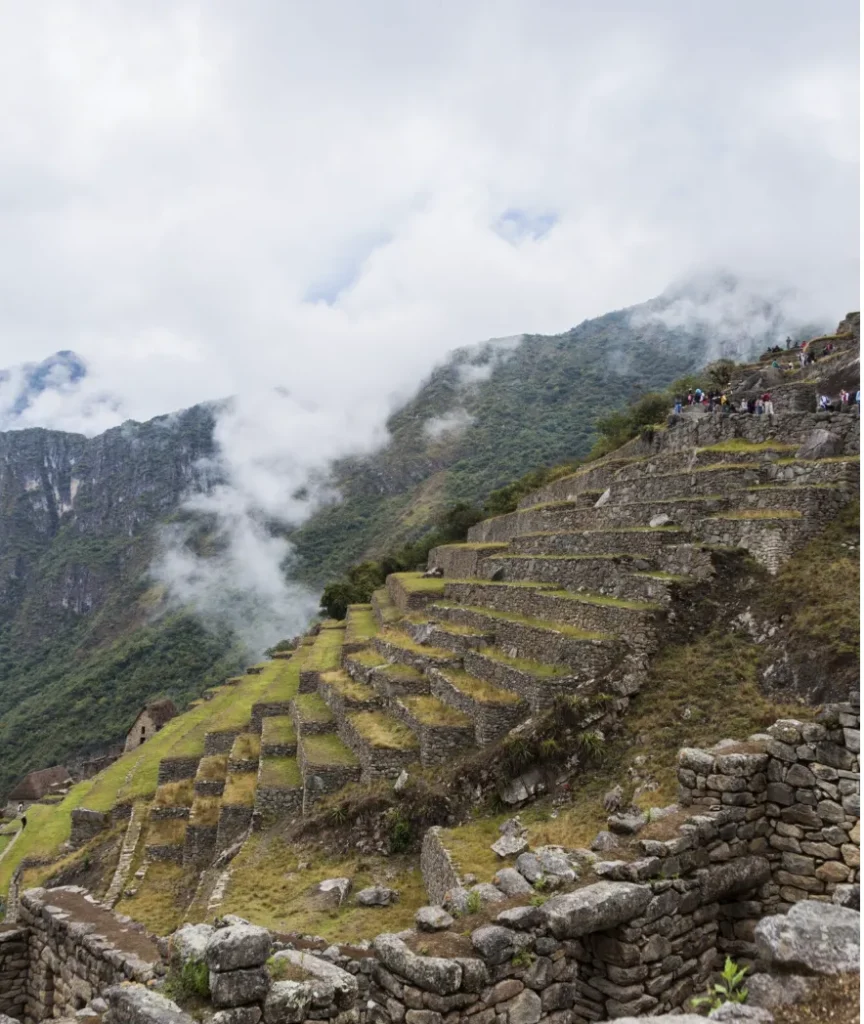
    Inca agricultural terraces at Machu Picchu wrapped in clouds
    The agricultural terraces at Machu Picchu, around 2,430 meters, much lower than Cusco.

    Daily Habits That Help

    Take it slowly on day one

    Walk slowly, rest often and avoid hiking, running or heavy lifting for the first 24 to 48 hours. Cusco’s streets are steep and the historic center is full of stairs, so even a city walk counts as exercise. A short nap on arrival is fine, but try to keep a normal sleep schedule.

    Drink water, but do not overdo it

    The air at altitude is dry, and you lose more water through breathing. Drink regularly throughout the day and watch the color of your urine. There is no need to force huge amounts; excessive water does not prevent altitude sickness.

    Eat light, carbohydrate-rich meals

    Digestion slows at altitude. Soups, rice, potatoes, quinoa and bread are easier than heavy, fatty meals. Local dishes like quinoa soup and lomo saltado in moderate portions are good choices.

    Limit alcohol and sedatives

    Alcohol dehydrates you and worsens sleep, and sleeping pills can depress breathing at night. Save the pisco sours for after you have acclimatized.

    Protect yourself from the sun and cold

    UV radiation is much stronger at altitude, and temperatures swing from warm afternoons to cold nights. Wear sunscreen, sunglasses and a hat, and layer up in the evening.

    GEAR WE RECOMMEND

    A fingertip pulse oximeter

    A small oximeter shows your blood oxygen level and heart rate in seconds. It cannot diagnose altitude sickness, but many trekkers like it for tracking how they adapt day by day.

    See options on Amazon →

    A Gentle First Day in Cusco, Hour by Hour

    If your itinerary does start in Cusco, here is what a well-paced arrival day looks like. Land in the morning and take a taxi or pre-arranged transfer to your hotel rather than walking with luggage. Check in, drink a glass of water or a cup of tea and lie down for an hour. Around lunchtime, eat something light, such as a quinoa soup, and avoid big portions of meat or fried food.

    In the afternoon, take a slow walk to the Plaza de Armas, which is mostly flat from the hotels around it. Sit on a bench, watch the city and resist the urge to climb up to San Blas or Sacsayhuamán. If you feel short of breath, stop and rest. Head back before sunset, because temperatures drop quickly. Have an early dinner, skip the alcohol and go to bed at a normal hour. The next morning, most people wake up feeling noticeably better, and that is the moment to start exploring the steeper neighborhoods.

    Common Myths About Altitude

    “I’m young and fit, so I won’t be affected.”

    Altitude sickness depends mainly on genetics, the speed of ascent and the altitude reached, not on age or fitness. Elite athletes get headaches in Cusco too.

    “If I felt fine last time, I’ll feel fine again.”

    Previous experience gives some idea of how you respond, but it is not a guarantee. A cold, poor sleep or a faster itinerary can change the outcome.

    “Drinking huge amounts of water prevents it.”

    Staying hydrated helps you feel better, and dehydration can mimic altitude symptoms, but excess water does not stop altitude sickness and can be harmful.

    “Machu Picchu is the highest point of the trip.”

    It is actually lower than Cusco. The highest points are on treks and side trips such as Rainbow Mountain and Humantay Lake.

    “A headache is normal, so I should just push on.”

    A mild headache that improves with rest is common. A headache that gets worse, or comes with vomiting, confusion or breathlessness at rest, is a signal to stop, rest and seek help.

    Packing List for High Altitude

    • High-SPF sunscreen and lip balm with sun protection
    • Sunglasses with UV protection
    • Warm layers: fleece, light down jacket, hat and gloves
    • Reusable water bottle
    • Electrolyte sachets for long days
    • Your regular medication plus simple painkillers
    • A copy of your travel insurance details and emergency numbers
    • Moisturizer and saline nasal spray for the dry air

    Coca Tea, Local Remedies and Their Limits

    In Cusco, almost every hotel offers mate de coca, a tea made from coca leaves. Andean people have used coca for centuries to cope with altitude, hunger and fatigue. Many travelers find it soothing and mildly energizing, but scientific evidence that it prevents altitude sickness is limited. Enjoy it as part of the culture, not as a cure.

    Keep in mind that coca leaves contain small amounts of alkaloids related to cocaine. Drinking the tea can lead to a positive result in some drug tests, and it is illegal to take coca leaves or coca products into many countries, including the United States. Drink it in Peru and leave it there.

    You will also see muña, an Andean mint tea that is good for digestion, and cans of oxygen sold in pharmacies. Bottled oxygen can relieve symptoms for a short time, but it does not speed up acclimatization.

    Medication: What to Ask Your Doctor

    Some travelers take preventive medication, most commonly acetazolamide, a prescription drug that can help the body acclimatize faster. It is not suitable for everyone. It has side effects such as tingling fingers and frequent urination, interacts with some conditions and medicines, and is not recommended for people with certain allergies. Only take it if a doctor prescribes it for you, ideally at a travel clinic a few weeks before your trip.

    Simple painkillers can relieve mild headaches, and anti-nausea medicine can help with an upset stomach. Bring any regular medication in its original packaging, with enough supply for the whole trip. Never use medication as a reason to ascend faster or ignore worsening symptoms.

    MACHU PICCHU EXPERIENCES

    Make the most of your Machu Picchu visit

    2-day trips, Huayna Picchu, Machu Picchu Mountain and private guides: the best Machu Picchu days are the ones you book ahead.

    SEE THE 2-DAY MACHU PICCHU TRIP →

    ★★★★★ Free cancellation on most activities

    Sleeping Well at Altitude

    Poor sleep is one of the most common complaints in Cusco, even among people with no other symptoms. At altitude, breathing can become irregular during sleep, with short pauses followed by deeper breaths, which wakes you up and leaves you feeling unrested. It usually improves after a few nights.

    To sleep better, keep the room warm, because Cusco hotels often lack central heating and nights are cold. Ask for an extra blanket or a heater, and wear a warm layer to bed. Avoid large meals and alcohol in the evening, and keep caffeine to the morning. A slightly raised pillow can help. If you wake up with a headache that gets worse during the day, take it seriously and rest rather than starting a long excursion.

    Altitude and Your Machu Picchu Visit

    Because Machu Picchu is lower than Cusco, the visit itself is rarely a problem for travelers who have spent a day or two in the area. Still, the citadel is built on a mountainside, and almost every route involves stairs. If you choose a mountain route, such as Huayna Picchu or Machu Picchu Mountain, you climb several hundred meters in a short time on steep steps.

    Pick a route that matches how you feel. If you are still adjusting, a standard circuit gives you the classic view and the main temples without a big climb. Save mountain routes for a second visit or for later in your trip. Start early, carry water, wear sunscreen, take regular breaks and let faster groups pass. Remember there are no toilets or food stalls inside, so prepare before you enter.

    Altitude and Treks: Extra Precautions

    If you plan to hike the Inca Trail, the Salkantay trek or Rainbow Mountain, altitude becomes much more important. These routes take you well above Cusco, sometimes to 4,600 meters or more, often far from roads and clinics. Follow these extra rules:

    • Spend at least three days in the Cusco area before starting a high trek.
    • Choose an operator whose guides carry oxygen and a first-aid kit and are trained in altitude emergencies.
    • Tell your guide immediately about any symptoms. Guides would rather adjust the pace than evacuate someone.
    • Never continue climbing with worsening symptoms. Rest at the same altitude or descend.

    Our comparison of the Inca Trail and the Salkantay trek explains the altitude profile of each route.

    Questions to Ask Your Tour Operator

    A good operator will be happy to answer these before you pay:

    • Do your guides carry bottled oxygen and a pulse oximeter on every tour?
    • Are guides trained in first aid and altitude emergencies?
    • What is the evacuation plan if someone gets seriously ill on the trail?
    • Can the itinerary include an extra acclimatization day?
    • Is the first night of the trek at a high camp, and how high?
    • Do you check on guests’ symptoms every morning?

    Clear, confident answers are a good sign. Vague answers, or a tour that starts the day after you land, are a reason to look elsewhere.

    Altitude Sickness by Traveler Type

    Children

    Children can get altitude sickness and may not describe their symptoms clearly. Watch for irritability, unusual tiredness, loss of appetite and trouble sleeping. Plan a gentle itinerary that sleeps low first, and talk to a pediatrician before traveling with very young children.

    Older travelers

    Age alone does not increase the risk of altitude sickness, but heart and lung conditions do. Get a check-up before your trip and discuss your itinerary with your doctor.

    People with medical conditions

    If you have heart disease, lung disease, anemia, sickle cell disease, high blood pressure or are pregnant, ask a doctor whether high altitude is safe for you and whether you need special precautions.

    FLIGHTS TO CUSCO

    Find the cheapest Lima → Cusco fares

    Compare every airline flying into Cusco in seconds, set price alerts and grab the early-morning departures that leave you time to acclimatize.

    COMPARE FLIGHTS →

    ★★★★★ Trusted by 100M+ travelers every month

    Why Travel Insurance Matters at Altitude

    Medical care in Cusco is generally good in private clinics, but it is not cheap, and evacuation from a remote trek can be very expensive. Make sure your travel insurance covers medical treatment abroad and emergency evacuation, and check whether it covers hiking at the altitudes you plan to reach. Keep your policy number and emergency phone line in your phone and on paper, and share them with your tour operator.

    Not sure when to plan your trip? Our guide to the best time to visit Machu Picchu explains how weather and crowds change across the year, and our ticket guide helps you choose a circuit that matches your energy level after arriving at altitude.

    Frequently Asked Questions

    Will I get altitude sickness at Machu Picchu?

    Machu Picchu is at about 2,430 meters, lower than Cusco, so most visitors feel fine there. The bigger challenge is usually Cusco, at about 3,400 meters.

    How long does it take to acclimatize to Cusco?

    Most people feel much better after one to three days. Full acclimatization takes longer, which is why high treks should start after at least two or three days in the area.

    Does coca tea prevent altitude sickness?

    Many travelers find it comforting, but evidence that it prevents altitude sickness is limited. Do not take coca products out of Peru, as they are illegal in many countries.

    Should I take acetazolamide for Cusco?

    Only if a doctor prescribes it. It can help some people acclimatize but has side effects and is not suitable for everyone.

    Is it better to stay in the Sacred Valley first?

    For many visitors, yes. The Sacred Valley is several hundred meters lower than Cusco, so sleeping there first often makes adjustment easier.

    Can fit people get altitude sickness?

    Yes. Fitness does not prevent altitude sickness. Fit people sometimes push too hard on the first day, which can make symptoms worse.

    What are the warning signs of serious altitude sickness?

    Breathlessness at rest, confusion, loss of coordination, a persistent cough or a severe headache that does not improve. Seek medical help and descend immediately.

    Can I drink alcohol in Cusco?

    It is best to avoid alcohol for the first day or two. It dehydrates you and can worsen sleep and symptoms.

    Do hotels in Cusco have oxygen?

    Many hotels keep oxygen for guests, and some rooms are oxygen-enriched. Ask when you book if this matters to you.

    Is Rainbow Mountain safe after arriving in Cusco?

    Rainbow Mountain reaches over 5,000 meters. It is best to visit only after several days of acclimatization and never on your first or second day.

    Conclusion: Go Slow, Sleep Low and Enjoy the View

    Altitude is part of the adventure of visiting Machu Picchu, not a reason to stay away. Plan an itinerary that sleeps low first, take your first days easy, drink water, eat light and listen to your body. Know the warning signs, carry good travel insurance and do not hesitate to ask for help. Treat the mountains with respect, and you will arrive at Machu Picchu with clear eyes and energy to enjoy every terrace.

    Before you fly, make sure you are covered for medical care abroad and book a relaxing first night in the Sacred Valley.

    TOURS & GUIDES

    Skip the stress with a guided Machu Picchu tour

    Licensed guides, train and bus combos and full-day tours from Cusco, with reviews from real travelers and free cancellation on most activities.

    SEE MACHU PICCHU TOURS →

    ★★★★★ Rated by millions of travelers worldwide

  • Best Time to Visit Machu Picchu: Month-by-Month Weather, Crowds and Prices

    Best Time to Visit Machu Picchu: Month-by-Month Weather, Crowds and Prices

    There is no bad month to see Machu Picchu, but there are very different months. Visit in July and you will likely enjoy blue skies, cold mornings and big crowds. Come in February and you may find the ruins wrapped in mist, the mountains a vivid green and the Inca Trail closed. Choose April or October and you might get the best of both worlds. The right time depends on what matters most to you: weather, crowds, prices, trekking or photography.

    This guide breaks the year down month by month, explains the dry and rainy seasons, highlights the festivals worth planning around and gives you practical advice on the best time of day to enter the citadel. By the end, you will know exactly when to book.

    Machu Picchu’s Two Seasons

    The Cusco region has two main seasons. Temperatures do not change much through the year, but rainfall does.

    Dry season: roughly May to September

    Days are mostly sunny and clear, with little rain. Mornings and nights in Cusco are cold, often near or below freezing in June and July, while Machu Picchu and Aguas Calientes, lower and in the cloud forest, are milder. This is the most popular time to visit, especially June to August, when North American and European summer holidays coincide with Peru’s own winter break and festivals.

    Rainy season: roughly November to March

    Rain falls most days, often as afternoon showers or storms, with heavier rain in January and February. Mornings can be clear, and the landscapes are spectacularly green. Crowds are smaller and prices for hotels can be lower, but landslides occasionally disrupt roads and trains, and the Inca Trail closes every February for maintenance.

    Shoulder months: April and October

    April marks the transition from wet to dry, and October from dry to wet. Both often bring a good mix of sunshine, green scenery and manageable crowds, which is why many experienced guides consider them the sweet spot.

    Month-by-Month Overview

    Month Weather Crowds Notes
    January Rainy, warm and humid at the ruins Moderate (holidays early in the month) Green landscapes, occasional landslides
    February Wettest month Low Inca Trail closed, cheapest period
    March Rainy, easing late in the month Low to moderate Inca Trail reopens; Easter can be busy
    April Mixed, drying out Moderate Excellent shoulder month
    May Mostly dry, clear Moderate to high One of the best months overall
    June Dry, cold nights High Inti Raymi festival in Cusco on June 24
    July Dry, cold nights Very high Peak season; book months ahead
    August Dry, windy Very high Peak season continues
    September Mostly dry, warmer High Great weather, slightly fewer people
    October Mixed, first showers Moderate Excellent shoulder month
    November Increasing rain Moderate to low Green, quieter, good deals
    December Rainy Moderate (busy over holidays) Christmas and New Year fill up

    The Best Months, Season by Season

    January

    The rainy season is in full swing. Expect showers most days, often in the afternoon. The first week is busy with Latin American holiday travelers, after which crowds drop. The ruins look lush and the clouds create moody, atmospheric photos. Keep an eye on news about road and rail conditions, and pack a good rain jacket.

    February

    The wettest month and the quietest at Machu Picchu. The Inca Trail is closed, and some treks are less pleasant, but the citadel remains open. If you do not mind rain and want fewer people, February can be rewarding. Build flexibility into your plans in case of travel disruptions.

    March

    Rain continues but begins to ease late in the month. The Inca Trail reopens on March 1. Easter week, which falls in March or April depending on the year, brings many domestic travelers and processions in Cusco, so book ahead if your dates overlap.

    April

    One of our favorite months. The landscape is still green from the rains, the skies are clearing and crowds have not yet reached their peak. Trails dry out, and both treks and train trips are pleasant. Occasional showers are still possible, so carry a light rain jacket.

    May

    Dry season arrives. May offers clear skies, comfortable daytime temperatures and slightly fewer visitors than June to August. It is an excellent month for treks, photography and combining Machu Picchu with other parts of Peru.

    FLIGHTS TO CUSCO

    Find the cheapest Lima → Cusco fares

    Compare every airline flying into Cusco in seconds, set price alerts and grab the early-morning departures that leave you time to acclimatize.

    COMPARE FLIGHTS →

    ★★★★★ Trusted by 100M+ travelers every month

    June

    Peak season starts. Days are sunny and nights are cold. On June 24, Cusco celebrates Inti Raymi, the Inca Festival of the Sun, with a spectacular reenactment at Sacsayhuamán. The city is full of energy and visitors, so book flights, hotels and tickets well in advance if you want to attend.

    July

    The busiest month. Clear skies make for excellent views, but you will share them with many people. Machu Picchu tickets, Inca Trail permits and Huayna Picchu slots sell out early. Peru’s national holidays at the end of July add domestic travelers to the mix.

    August

    Still very busy and dry, with windy days in the highlands. Mornings at the ruins are often clear. It remains a top month for trekking. Expect high prices and plan early.

    September

    The weather stays mostly dry and gets slightly warmer, while crowds start to decrease after the summer holidays. September is a fantastic compromise for travelers who want good weather without the peak-season rush.

    October

    The other great shoulder month. The first rains arrive, often as short afternoon showers, and the landscape starts to turn green again. Prices begin to fall and crowds thin out.

    November

    Rain becomes more frequent, but mornings are often bright. It is a good month for travelers who want quieter visits and lower prices and do not mind some showers.

    December

    The rainy season is established. The first weeks are calm, while Christmas and New Year bring many visitors to Cusco and Machu Picchu. If you plan to travel over the holidays, book tickets and trains early.

    WHERE TO SLEEP

    Book your room in Cusco & Aguas Calientes

    Thousands of hotels, hostels and boutique stays with free cancellation on most rooms, so you can lock in a bed before Machu Picchu dates sell out.

    CHECK HOTEL DEALS →

    ★★★★★ 28M+ listings · free cancellation on most stays

    Best Time for Specific Goals

    Goal Best months Why
    Clear skies and photos May – September Driest months with the most sunshine
    Fewer crowds November, February, March Rainy season, but quieter
    Best balance April, May, September, October Good weather, manageable crowds
    Inca Trail May – September (book months ahead) Dry trail; closed in February
    Salkantay trek May – September Clear passes, but very cold nights
    Festivals June Inti Raymi and Corpus Christi in Cusco
    Lower prices November – March (except holidays) Low season deals on hotels

    Planning a trek? Our comparison of the Inca Trail and the Salkantay trek explains how each route changes through the seasons.

    The Best Time of Day to Visit Machu Picchu

    Choosing the right hour can be as important as choosing the right month. Machu Picchu uses timed entry slots, from early morning to mid-afternoon, and each has advantages.

    Early morning (first slots)

    The earliest slots offer the chance to see the ruins emerge from the morning mist, sometimes with sunrise light on the peaks. Crowds build quickly, though, because these slots are in high demand. To use them, you must sleep in Aguas Calientes and take one of the first shuttles. Note that fog often hides the view at first, especially in the rainy season, and lifts later in the morning.

    Late morning

    By mid-morning, the clouds often lift and the light is bright. This is when the most day-trippers arrive, so expect busier paths. It is the easiest time to visit if you are coming by train from the Sacred Valley the same day.

    Afternoon

    Afternoon slots are often quieter, as many morning visitors have already left. The light is warmer for photos, especially in the dry season. In the rainy season, however, afternoon showers are more likely. Check your train schedule so you do not miss the last departure back.

    Our Machu Picchu tickets and circuits guide explains how to choose the right route and entry time, and our Aguas Calientes hotel guide helps you plan an overnight stay for early slots.

    TOURS & GUIDES

    Skip the stress with a guided Machu Picchu tour

    Licensed guides, train and bus combos and full-day tours from Cusco, with reviews from real travelers and free cancellation on most activities.

    SEE MACHU PICCHU TOURS →

    ★★★★★ Rated by millions of travelers worldwide

    Is Sunrise at Machu Picchu Worth It?

    Many travelers dream of watching the sun rise over Machu Picchu. The reality is more nuanced. The citadel sits in a deep valley surrounded by high mountains, so the sun appears over the peaks some time after the official sunrise, and the first rays reach the ruins gradually. In the dry season, clear mornings can produce beautiful golden light on the stone walls. In the rainy season, you are more likely to see thick fog that slowly lifts.

    To try it, you need an early ticket, a night in Aguas Calientes and a place near the front of the shuttle queue, which starts forming well before the first bus. Some travelers prefer to walk up the stairs in the dark with a headlamp. Either way, the atmosphere of the early morning, with mist drifting between the peaks, is special even without a perfect sunrise. Just do not plan your whole trip around a sunrise photo; the views later in the morning are often clearer.

    How the Season Affects Your Budget

    Entrance ticket prices are fixed and do not change with the season, but almost everything else does. In June, July and August, hotels in Cusco and Aguas Calientes charge their highest rates, and train fares on popular departure times are higher. Flights from Lima to Cusco also rise around national holidays and the July school break.

    From November to March, outside of Christmas, New Year and Easter, many hotels offer lower rates and promotions, and train operators sometimes release discounted fares. If budget is your priority and you can handle some rain, the low season can save you a significant amount. A good compromise is to travel in early May or late September, when the weather is still dry but prices have not peaked or have already started to drop.

    Traveling in the Rainy Season: Stay Flexible

    Heavy rains occasionally trigger landslides on the roads and railway in the Urubamba valley, especially in January and February. When that happens, trains may be delayed or suspended for a few hours or, more rarely, days. Most travelers never experience a disruption, but it is wise to plan for one.

    • Leave at least one spare day between Machu Picchu and your international flight.
    • Choose hotels and trains with flexible change policies when possible.
    • Follow your train operator’s notifications and keep their contact details handy.
    • Buy travel insurance that covers delays, missed connections and extra nights.
    • Avoid walking the Hidroeléctrica route in heavy rain.

    What to Pack by Season

    Dry season (May – September)

    • Warm layers for cold mornings and nights: fleece, light down jacket, hat and gloves
    • Sun hat, sunglasses and high-SPF sunscreen
    • Lip balm and moisturizer for the dry air
    • Light layers for warm middays at the ruins

    Rainy season (November – March)

    • A good rain jacket and a cover for your daypack
    • Quick-dry clothing and an extra pair of socks
    • Waterproof shoes with good grip, because stone steps get slippery
    • Insect repellent for the humid cloud forest
    • Waterproof phone case or dry bag

    GEAR WE RECOMMEND

    Waterproof hiking shoes with good grip

    Machu Picchu’s stone steps get slippery after rain. A pair of light waterproof hiking shoes with a grippy sole keeps you safe and dry in every season.

    See options on Amazon →

    Weather Myths and Realities

    “It always rains in the rainy season.”

    Rain is frequent, but it rarely lasts all day. Mornings are often clear, and showers come and go. Many travelers have wonderful visits in the rainy season.

    “The dry season guarantees clear views.”

    Not always. Machu Picchu is in a cloud forest, and morning mist is common all year. It usually lifts by mid-morning, often revealing the most dramatic views of the day.

    “Low season means no crowds at all.”

    Machu Picchu is popular all year. Low season simply means fewer people, not an empty site. Holidays in December, January and Easter can be busy even in the rainy season.

    “Winter in Peru means snow at Machu Picchu.”

    June and July are winter in the southern hemisphere, but Machu Picchu sits in a subtropical cloud forest at about 2,430 meters. Snow there is practically unheard of. What you will notice is cold early mornings and chilly nights in Cusco, followed by pleasant, sunny days at the ruins. Pack layers you can remove as the day warms up, and save the heavy winter gear for high treks such as Salkantay.

    Festivals and Events Worth Planning Around

    • Inti Raymi (June 24). The Festival of the Sun, a grand reenactment of the Inca winter solstice ceremony at Sacsayhuamán in Cusco. Hotels fill up weeks ahead.
    • Corpus Christi (May or June). Colorful processions with statues of saints from Cusco’s churches, accompanied by traditional food.
    • Qoyllur Rit’i (May or June). A remarkable Andean pilgrimage to a glacier near Ausangate, mixing Catholic and indigenous traditions.
    • Peruvian national holidays (late July). Independence Day celebrations bring many domestic travelers.
    • Easter week (March or April). Processions in Cusco and busy trains and hotels.

    MACHU PICCHU EXPERIENCES

    Make the most of your Machu Picchu visit

    2-day trips, Huayna Picchu, Machu Picchu Mountain and private guides: the best Machu Picchu days are the ones you book ahead.

    SEE THE 2-DAY MACHU PICCHU TRIP →

    ★★★★★ Free cancellation on most activities

    A 7-Day Shoulder-Season Itinerary

    Here is how we would spend a week in late April, May, September or October, when the weather is good and the crowds are manageable.

    • Day 1: Fly from Lima to Cusco in the morning and transfer straight to the Sacred Valley. Rest and take an easy walk.
    • Day 2: Visit the Pisac market and ruins, then continue to the Moray terraces and Maras salt pans.
    • Day 3: Explore the Ollantaytambo fortress in the morning and take an afternoon train to Aguas Calientes. Soak in the hot springs.
    • Day 4: Visit Machu Picchu on an early classic circuit with a guide. Stay a second night or return to the valley.
    • Day 5: Optional second visit with Huayna Picchu, or return to Cusco by train and transfer.
    • Day 6: Discover Cusco: the cathedral, Qorikancha, the San Blas neighborhood and the San Pedro market.
    • Day 7: Visit Sacsayhuamán in the morning and fly back to Lima in the afternoon, or extend to Rainbow Mountain once fully acclimatized.

    This plan sleeps low first, gives you two chances at good weather at the ruins and ends in Cusco when your body has adapted. In the shoulder season, you can usually book it four to eight weeks ahead.

    Combining Machu Picchu with the Rest of Peru

    If you are planning a longer trip, the season at Machu Picchu affects other destinations too. Lima’s coast is gray and cool from June to October and sunny from December to April. The Amazon is wetter from December to April. Lake Titicaca is cold but clear in the dry season. A trip in May or September often gives you good weather across most of the country. If you are coming from Lima, our route guide explains how to fit everything together, and our altitude guide helps you plan a comfortable acclimatization.

    TRAVEL INSURANCE

    Hike the Andes fully covered

    Medical cover for trips abroad, including emergency care in Peru. Sign up online in minutes, even if you are already on the road.

    GET COVERED NOW →

    ★★★★★ Built for nomads and travelers in 180+ countries

    Frequently Asked Questions

    What is the best month to visit Machu Picchu?

    May and September offer an excellent balance of dry weather and fewer crowds than the peak months of June to August. April and October are also great shoulder months.

    When is the rainy season at Machu Picchu?

    Roughly November to March, with the heaviest rain in January and February.

    Is Machu Picchu open in February?

    Yes. The citadel is open all year. Only the Inca Trail closes in February for maintenance.

    When is Machu Picchu least crowded?

    The rainy season months, especially February, March and November, are usually the quietest, except during holidays.

    What is the best time of day to visit Machu Picchu?

    Early morning offers mist and sunrise atmosphere, while afternoon slots are often quieter with warm light. Late morning is the busiest time.

    Is it worth visiting Machu Picchu in the rainy season?

    Yes, if you pack well and stay flexible. You will enjoy green landscapes, fewer crowds and often clear mornings.

    How cold does it get at Machu Picchu?

    The citadel is milder than Cusco. Daytime temperatures are usually comfortable, while early mornings can be cool. Cusco nights in June and July can drop below freezing.

    When should I book tickets for the high season?

    For June to August, book entrance tickets two to three months ahead, and even earlier for Huayna Picchu or the Inca Trail.

    Will fog block the view at Machu Picchu?

    Morning fog is common all year, but it usually lifts by mid-morning. Patience is often rewarded with spectacular views.

    When is Inti Raymi?

    Inti Raymi is celebrated every year on June 24 in Cusco, with the main ceremony at Sacsayhuamán.

    Conclusion: Pick Your Season, Then Book Early

    For most travelers, the best time to visit Machu Picchu is the shoulder of the dry season: April, May, September and October. If you need guaranteed sunshine and do not mind crowds, June to August is reliable. If you love quiet trails and green mountains and can handle some rain, the wet season has its own magic. Whatever you choose, book your entrance ticket first, plan your entry time carefully and pack for changeable weather. Machu Picchu is spectacular in every season.

    Found your perfect month? Compare flights to Cusco and secure your hotel now, especially if you are traveling in peak season.

    FLIGHT DELAYED?

    Get paid for delays & cancellations

    If your flight to Peru was delayed, cancelled or overbooked, you may be owed compensation. Check your flight in under two minutes.

    CHECK MY FLIGHT →

    ★★★★★ Helped 2M+ passengers claim compensation