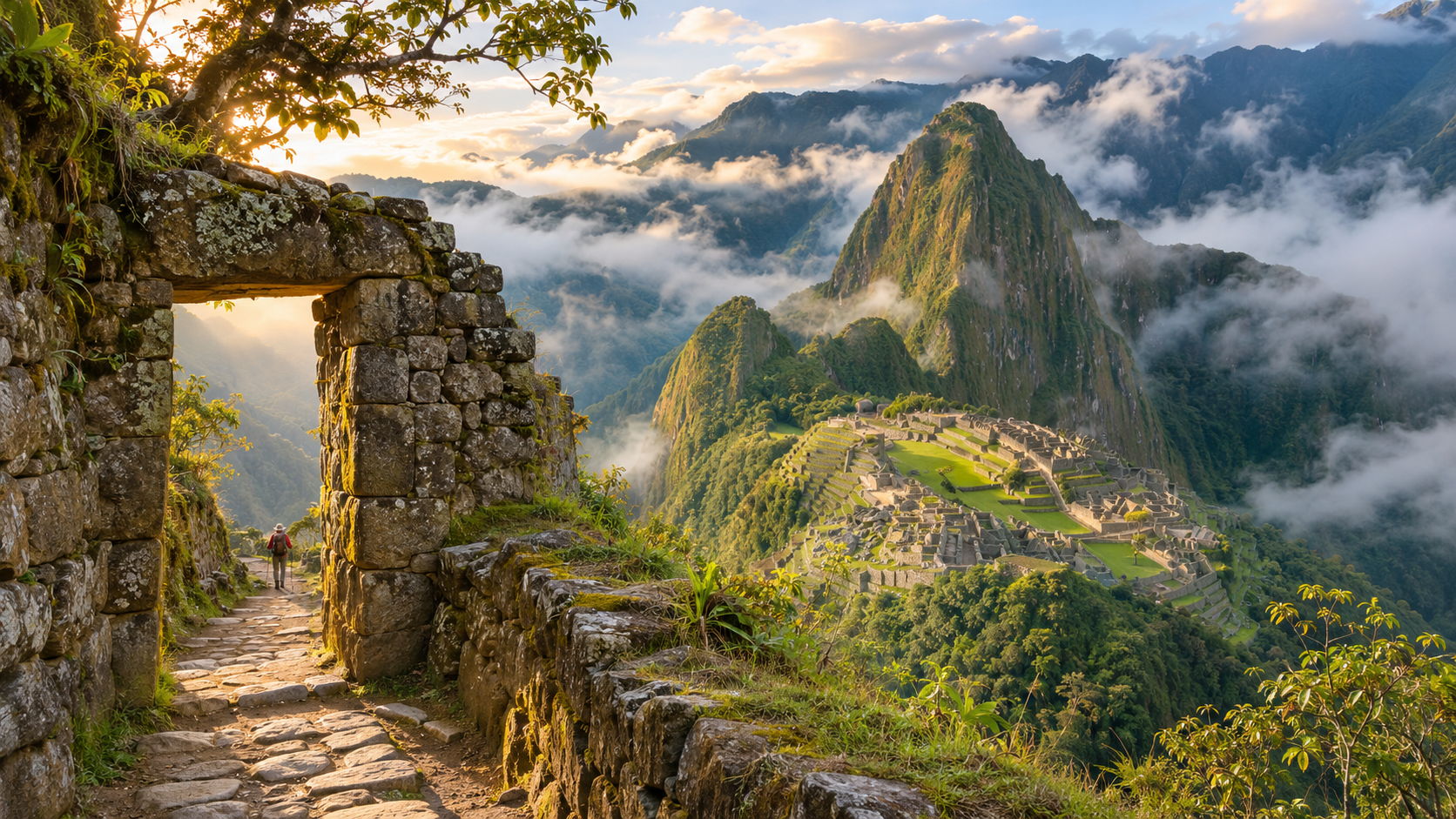
Machu Picchu is one of the most famous archaeological sites in the world, yet many travelers arrive knowing little about its story. The questions people ask most are “Who built Machu Picchu?”, “Why was it built?” and “Why was Machu Picchu abandoned?” The answers reveal a remarkable chapter of Inca history, full of engineering genius, royal power and mystery.
This guide tells the story of Machu Picchu from its construction in the 15th century to its rediscovery and its place today as a World Heritage Site, with the meaning of its main buildings and some of the most surprising facts about the citadel.
Who Built Machu Picchu?
Machu Picchu was built by the Incas, most likely under the emperor Pachacuti, who ruled from about 1438 and transformed the Inca kingdom of Cusco into a vast empire, known as Tawantinsuyu. Most historians believe the site was constructed around the middle of the 15th century as a royal estate for Pachacuti and his family. Research using radiocarbon dating, published in 2021, suggests the site was occupied from around 1420, slightly earlier than previously thought.
The builders were skilled stonemasons and laborers from across the empire, working under the mit’a system, a form of rotating labor service owed to the state. Thousands of people would have been involved in quarrying, shaping and moving stones, building terraces and creating the complex water system.
Why Was Machu Picchu Built?
Machu Picchu was not a lost city or a fortress, as early explorers believed, but a royal retreat and religious center. Its purposes likely included:
- A royal estate where the emperor, his family and the nobility could rest, hold ceremonies and entertain guests.
- A sacred place aligned with the surrounding mountains (apus), the sun and the stars.
- An astronomical observatory, with structures that mark solstices and equinoxes.
- A symbol of power in a newly conquered region on the edge of the Amazon.
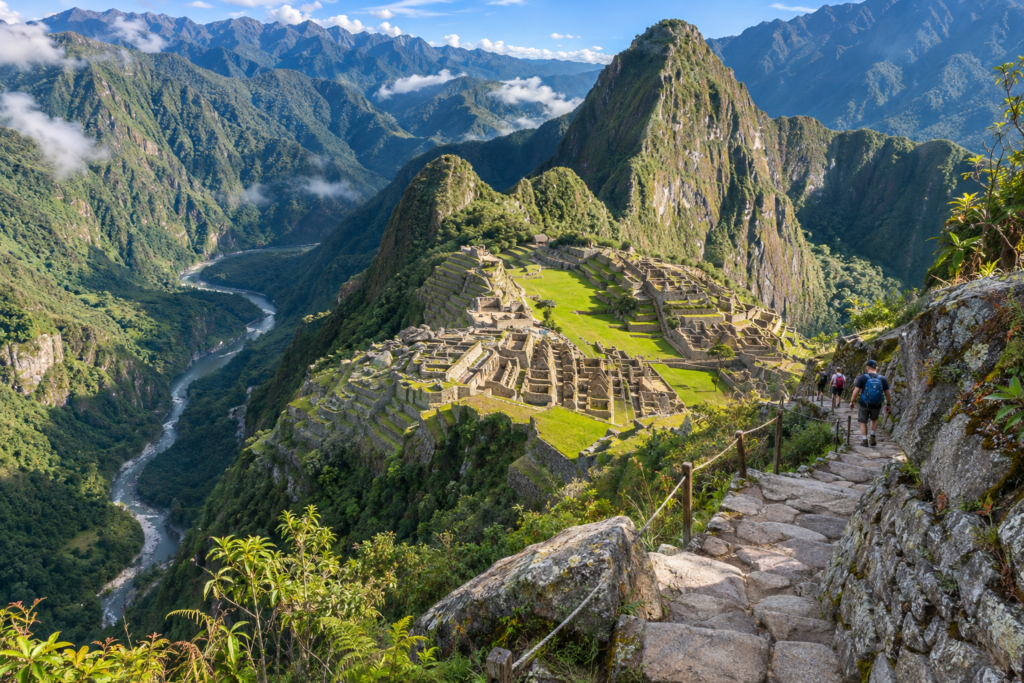
Its location, on a ridge between two peaks and surrounded by the Urubamba River on three sides, offered protection, spectacular views and spiritual significance.
Machu Picchu Timeline
| Date | Event |
|---|---|
| Around 1420–1450 | Construction begins under Pachacuti |
| Late 15th century | Site in use as a royal estate and religious center |
| 1532 | Spanish conquistadors arrive in Peru; the Inca Empire collapses soon after |
| Mid-16th century | Machu Picchu is gradually abandoned |
| 19th century | Local farmers know the site; some explorers pass nearby |
| 1911 | Hiram Bingham brings Machu Picchu to international attention |
| 1981 | Peru declares the Historic Sanctuary of Machu Picchu |
| 1983 | UNESCO lists it as a World Heritage Site |
| 2007 | Voted one of the New Seven Wonders of the World |
Learn more on the official UNESCO World Heritage page for Machu Picchu.
TOURS & GUIDES
Skip the stress with a guided Machu Picchu tour
Licensed guides, train and bus combos and full-day tours from Cusco, with reviews from real travelers and free cancellation on most activities.
★★★★★ Rated by millions of travelers worldwide
How Did the Incas Build Machu Picchu?
The Incas built Machu Picchu without iron tools, wheels or draft animals strong enough to pull heavy loads. Instead, they relied on stone hammers, bronze tools, ramps, levers and enormous human effort. Much of the granite came from a quarry on the site itself.
Mortarless walls
The most important buildings use ashlar masonry: stones cut so precisely that they fit together without mortar, so tightly that a knife blade cannot slide between them. This technique also made the walls resistant to earthquakes. When the ground shakes, the stones “dance” slightly and fall back into place.
Hidden foundations
Engineers estimate that around 60 percent of the construction at Machu Picchu is underground, in foundations and drainage layers of crushed rock that absorb the heavy rains of the cloud forest.
Terraces and water
More than 600 terraces prevent erosion and provided land for crops. A canal carried spring water into the city to a sequence of 16 fountains, a system that still works today.
The Main Buildings and Their Meaning
| Structure | What it was | Why it matters |
|---|---|---|
| Temple of the Sun | Curved tower above a natural cave | Windows align with the June solstice sunrise |
| Royal Tomb | Cave below the Temple of the Sun | Possibly a place to keep royal mummies |
| Intihuatana | Carved stone pillar | Linked to astronomy and the sun’s movement |
| Temple of the Three Windows | Wall with three large trapezoidal windows | Symbolic link to Inca origin myths |
| Main Temple | Large three-walled temple | Finest masonry in the Sacred Plaza |
| Temple of the Condor | Rock carved in the shape of a condor | The condor represented the upper world |
| Royal Residence | Group of rooms with private bath | Thought to be Pachacuti’s quarters |
The circuit you choose determines which of these structures you see. Our circuits guide explains the routes, and a guided visit helps you understand each building. See do you need a guide for Machu Picchu.
Who Lived at Machu Picchu?
Archaeologists estimate that around 750 people lived at Machu Picchu at its peak, though the population changed with the seasons and the presence of the emperor. Residents included members of the royal household, priests, servants, artisans and farmers. Studies of human remains found at the site show that many workers came from distant parts of the empire, from the coast to the Amazon, reflecting the diversity of Tawantinsuyu.
Why Was Machu Picchu Abandoned?
No one knows for certain, but historians point to several connected causes in the decades after 1532:
- The collapse of the Inca state after the Spanish conquest removed the royal patronage that kept the estate running.
- Epidemics of smallpox and other European diseases, which spread ahead of the Spanish and killed a large part of the population.
- Civil war between the Inca princes Huáscar and Atahualpa, which weakened the empire just before the conquest.
- Loss of labor, as people moved or were forced into Spanish systems of work.
Importantly, there is no evidence that the Spanish ever found Machu Picchu. This is why the site was not looted or destroyed like many Inca temples in Cusco.
MACHU PICCHU EXPERIENCES
Make the most of your Machu Picchu visit
2-day trips, Huayna Picchu, Machu Picchu Mountain and private guides: the best Machu Picchu days are the ones you book ahead.
SEE THE 2-DAY MACHU PICCHU TRIP →
★★★★★ Free cancellation on most activities
The Rediscovery in 1911
Machu Picchu was never truly lost to local people; farmers lived and grew crops on its terraces. In July 1911, the American lecturer Hiram Bingham, guided by local farmer Melchor Arteaga and a young boy from a family living at the site, reached the ruins and later brought them to world attention through articles and photographs, most famously in National Geographic in 1913. Earlier visitors, including the Peruvian farmer Agustín Lizárraga, had left inscriptions at the site years before.
Bingham’s expeditions took thousands of artifacts to Yale University. After a long dispute, Yale returned them to Peru between 2011 and 2012, and many are now displayed in Cusco at the Casa Concha museum.
Astronomy at Machu Picchu
The Incas were careful observers of the sky, and astronomy guided their farming calendar and religious festivals. At Machu Picchu, the Temple of the Sun has a window through which the first rays of the June solstice sunrise fall onto a carved stone inside. The Intihuatana stone is thought to have been used to track the sun’s position through the year. These alignments show how the site was designed in harmony with the cosmos, not just the landscape.
Machu Picchu Name and Meaning
“Machu Picchu” means “old mountain” or “old peak” in Quechua, referring to the mountain south of the ruins. “Huayna Picchu”, the peak behind the classic view, means “young mountain”. Some researchers believe the Incas may have called the site Huayna Picchu or another name entirely, based on colonial documents. Compare the two mountain hikes in our Huayna Picchu vs Machu Picchu Mountain guide.
Fascinating Facts About Machu Picchu
- It sits at about 2,430 meters, lower than Cusco.
- The site covers more than 32,000 hectares as a Historic Sanctuary, rich in orchids, birds and spectacled bears.
- Llamas graze freely on the terraces and help keep the grass short.
- Some stones in the walls weigh more than 50 tons.
- The Inca Trail was a royal road connecting the estate to Cusco.
- Daily visitor numbers are capped to protect the site.
GEAR WE RECOMMEND
A book on Inca history
Read a well-illustrated history of the Incas before you go and Machu Picchu’s temples will make much more sense on the day.
Inca History Beyond Machu Picchu
To understand Machu Picchu fully, visit the other Inca sites around Cusco: Sacsayhuamán, Qorikancha, Pisac and Ollantaytambo. A Cusco city and Inca ruins tour covers the essentials in a few hours. See our list of things to do in Cusco and our itinerary guide to fit them in.
The Inca Empire stretched as far as Bolivia, Chile and Argentina. Uncover the Andes covers the wider region in its Machu Picchu travel guide, and in Bolivia, Isla Incahuasi in the Salar de Uyuni has its own connection to Inca routes; read about Isla Incahuasi.
WHERE TO SLEEP
Book your room in Cusco & Aguas Calientes
Thousands of hotels, hostels and boutique stays with free cancellation on most rooms, so you can lock in a bed before Machu Picchu dates sell out.
★★★★★ 28M+ listings · free cancellation on most stays
Visiting Machu Picchu Today
Today, Machu Picchu is protected by strict rules: timed tickets, fixed circuits, limited daily visitors and an official guide requirement. These measures help preserve the site for future generations. Plan ahead, buy tickets early and travel respectfully. Our guide to getting to Machu Picchu explains the journey step by step.
TRAVEL INSURANCE
Hike the Andes fully covered
Medical cover for trips abroad, including emergency care in Peru. Sign up online in minutes, even if you are already on the road.
★★★★★ Built for nomads and travelers in 180+ countries
FLIGHTS TO CUSCO
Find the cheapest Lima → Cusco fares
Compare every airline flying into Cusco in seconds, set price alerts and grab the early-morning departures that leave you time to acclimatize.
★★★★★ Trusted by 100M+ travelers every month
Frequently Asked Questions
Who built Machu Picchu?
The Incas, most likely under the emperor Pachacuti in the 15th century.
When was Machu Picchu built?
Around the middle of the 15th century; recent dating suggests occupation from about 1420.
Why was Machu Picchu built?
As a royal estate and religious center for the Inca emperor and his family, aligned with sacred mountains and the sun.
Why was Machu Picchu abandoned?
Probably due to the collapse of the Inca state after the Spanish conquest, epidemics and loss of labor.
Did the Spanish find Machu Picchu?
There is no evidence they did, which is why the site survived intact.
Who discovered Machu Picchu?
Local farmers always knew it; Hiram Bingham brought it to international attention in 1911.
How did the Incas build Machu Picchu without mortar?
They cut stones to fit perfectly together, creating earthquake-resistant walls.
How many people lived at Machu Picchu?
Around 750 people at its peak, including royals, priests, servants and farmers.
What does Machu Picchu mean?
“Old mountain” or “old peak” in Quechua.
Is Machu Picchu one of the Seven Wonders of the World?
Yes. It was voted one of the New Seven Wonders of the World in 2007.
Conclusion: A Story Written in Stone
Machu Picchu was built by the Incas as a royal estate and sacred center, abandoned after the collapse of their empire and rediscovered by the wider world in 1911. Knowing its story transforms your visit: every wall, window and terrace becomes part of a living history. Read up, hire a good guide and take your time among the stones.
Ready to see it for yourself? Book a guided tour, choose your hotel and protect your trip with travel insurance.
MACHU PICCHU EXPERIENCES
Make the most of your Machu Picchu visit
2-day trips, Huayna Picchu, Machu Picchu Mountain and private guides: the best Machu Picchu days are the ones you book ahead.
SEE THE 2-DAY MACHU PICCHU TRIP →
★★★★★ Free cancellation on most activities