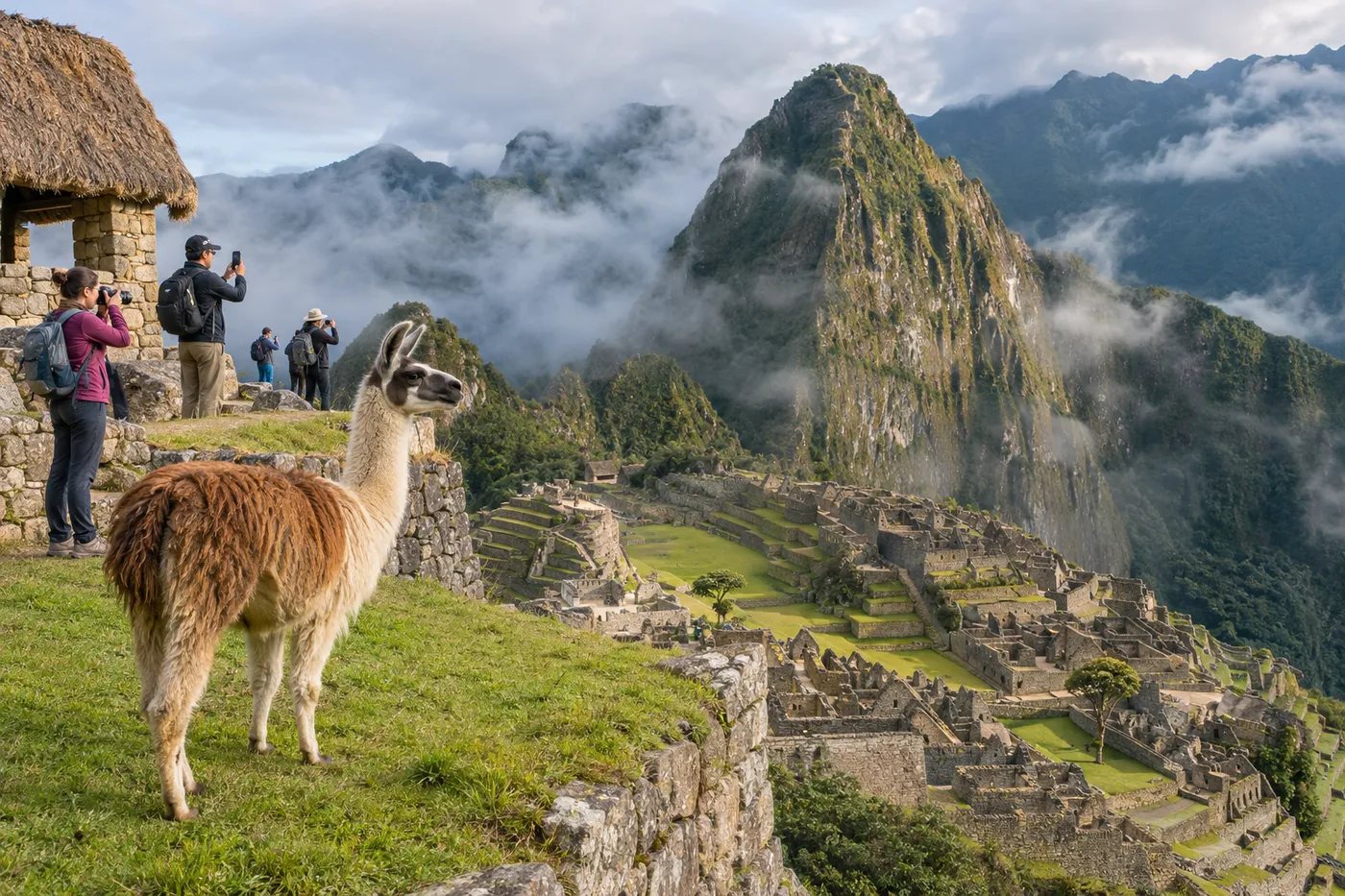
Almost everyone who visits Machu Picchu dreams of the same photo: the terraced citadel on its ridge, Huayna Picchu rising behind it and clouds drifting through the valley. What many travelers do not realize until they arrive is that this shot is only possible from certain viewpoints, and since 2024 your ticket decides which of those viewpoints you can reach.
This guide answers the questions photographers ask most: where is the classic Machu Picchu photo taken, which circuit should I buy, what time of day has the best light, can I bring a tripod or drone, and how do I get photos without crowds? We also share settings, gear and composition ideas that work for phones and cameras alike.
Where Is the Classic Machu Picchu Photo Taken?
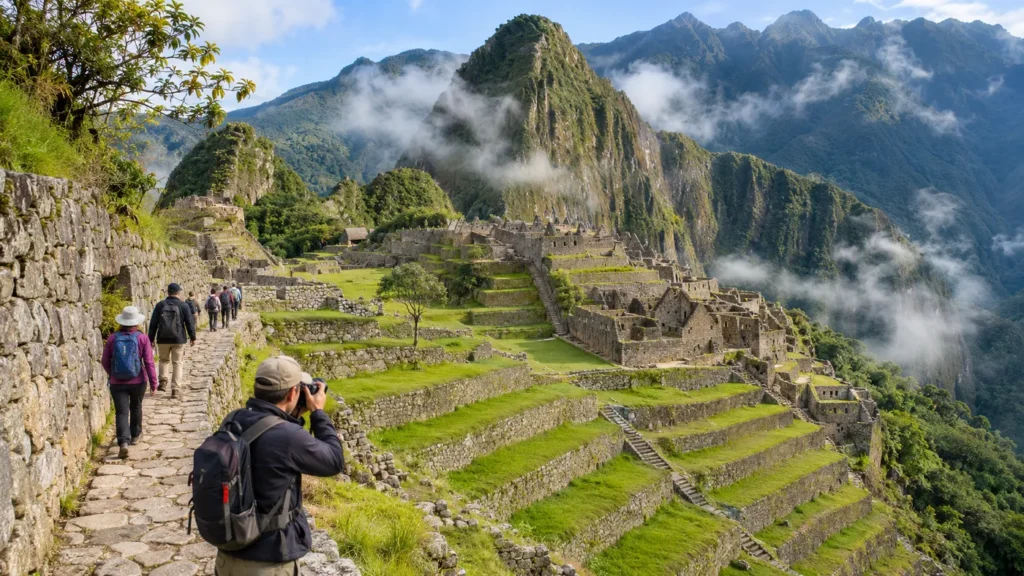
The postcard view is taken from the upper terraces near the Guardian’s House (Casa del Guardián), on the southern side of the site. From here you look down over the agricultural terraces and the urban sector, with Huayna Picchu as the backdrop. This area is part of Circuit 1 (Panoramic) and the opening section of Circuit 2 (Classic).
If your ticket is for Circuit 3, you will not reach this viewpoint. That is the single most important thing to know before you buy. Our tickets and circuits guide explains every route in detail.
The 10 Best Photo Spots at Machu Picchu
1. The Guardian’s House
The iconic panorama. Arrive early and walk slightly left or right of the main crowd to find a clean angle. The thatched roof of the house itself makes a great foreground element.
2. The Upper Terraces (Route 1-B)
A little below the Guardian’s House, the long agricultural terraces lead your eye toward the city. Using the terrace lines as leading lines gives depth to wide-angle shots.
3. The Funerary Rock Area
Near the top of the site, this area offers another elevated view with fewer people, and a chance to frame the citadel between stone walls.
4. Intipunku, the Sun Gate (Route 1-C)
The last stop of the Inca Trail, high above the citadel. From here Machu Picchu looks small and dramatic in the vast landscape. The walk takes about an hour each way and rewards you with a wide, cinematic view.
5. The Inca Bridge (Route 1-D)
A short, flat trail to a log bridge set into a sheer cliff. The path itself, hugging the rock face, is one of the most photogenic corners of the site.
6. Huayna Picchu Summit (Route 3-A)
From the top of the peak in the background of every postcard, you look down on the citadel from the opposite side. The climb is steep, but the bird’s-eye photo is unforgettable.
7. Machu Picchu Mountain (Route 1-A)
Higher than Huayna Picchu, with sweeping views over the entire site, the Urubamba River and the surrounding peaks. Great on clear mornings.
8. The Temple of the Sun and Royal Tomb
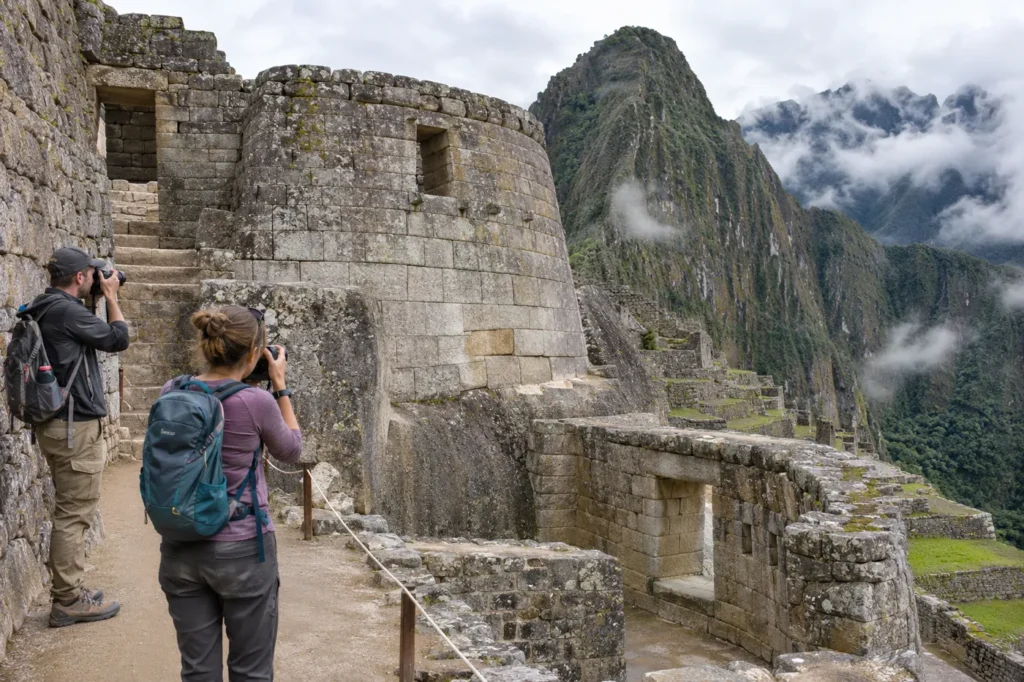
Inside the urban sector, the curved walls of the Temple of the Sun show the Inca masonry at its best. Use a telephoto or zoom to isolate details of the stonework.
9. The Main Plaza and the Sacred Rock
Wide green lawns, grazing llamas and the outline of mountains behind the Sacred Rock make relaxed, natural compositions.
10. The Llamas
The resident llamas wander the terraces and often pose in front of the ruins. Keep a respectful distance and wait for them to walk into your frame rather than approaching them.
TOURS & GUIDES
Skip the stress with a guided Machu Picchu tour
Licensed guides, train and bus combos and full-day tours from Cusco, with reviews from real travelers and free cancellation on most activities.
★★★★★ Rated by millions of travelers worldwide
Which Circuit Is Best for Photography?
| Circuit / Route | Classic panorama | Best photo highlights | Difficulty |
|---|---|---|---|
| 1-A Machu Picchu Mountain | Yes | Highest panoramic views | Hard |
| 1-B Upper Terrace | Yes | Fastest route to the postcard view | Easy |
| 1-C Intipunku | Yes | Sun Gate view from above | Moderate |
| 1-D Inca Bridge | Yes | Cliff-edge trail | Easy |
| 2-A / 2-B Classic | Yes | Panorama plus temples and plazas | Easy to moderate |
| 3-A Huayna Picchu | No | Bird’s-eye view from the peak | Hard |
| 3-B Royalty | No | Royal residences and stonework | Easy |
For most photographers, the ideal combination is Route 2-A for the classic panorama and temples, plus a second visit with Huayna Picchu or Machu Picchu Mountain for views from above. Sleeping in Aguas Calientes makes two visits easy; see our Aguas Calientes hotel guide.
WHERE TO SLEEP
Book your room in Cusco & Aguas Calientes
Thousands of hotels, hostels and boutique stays with free cancellation on most rooms, so you can lock in a bed before Machu Picchu dates sell out.
★★★★★ 28M+ listings · free cancellation on most stays
Best Time of Day for Photos
Machu Picchu sits in a cloud forest, so light and weather change quickly. Each time slot has its own character:
- Early morning (first entry slots): mist rising from the valley, soft light and the most atmospheric images. Clouds may hide the view at first, then clear dramatically.
- Mid-morning: clouds often lift, and the light is bright and clear. This is also the busiest time.
- Afternoon: warmer, directional light on the stone walls and fewer people, as day-trippers leave. In the rainy season, afternoon showers are more likely.
Season matters too. The dry months from May to September bring blue skies, while the rainy season paints the terraces bright green and adds moody clouds. Our best time to visit guide explains the weather month by month.
Camera Rules at Machu Picchu
Before you pack your gear, know the rules. These are enforced at the entrance and inside the site:
- Tripods and monopods are not allowed without special authorization.
- Drones are prohibited without a permit from the authorities.
- Selfie sticks are not permitted.
- Large backpacks must be left in storage at the entrance; a small daypack is fine.
- Professional shoots, such as commercial filming or wedding photography, need prior permission.
Phones and handheld cameras with any lens are perfectly fine for personal photography.
GEAR WE RECOMMEND
A lens cleaning kit
Mist and drizzle leave droplets on your lens within minutes. A microfiber cloth and blower in your pocket can save your best shot of the day.
Gear and Settings That Work
Lenses
A wide-angle lens (16 to 24 mm on full frame) captures the panorama and the mountains. A standard zoom (24 to 70 mm) covers most situations. A short telephoto (70 to 200 mm) is great for isolating Huayna Picchu, stonework details and llamas. On a phone, use the main camera for the panorama and the 2x or 3x lens to compress the mountains behind the ruins.
Settings
- Use a polarizing filter on sunny days to deepen the sky and reduce glare on wet stones.
- Expose for the sky when clouds are bright, then lift the shadows in editing.
- Bracket your exposures or use HDR mode on high-contrast mornings.
- Keep your shutter speed fast enough to avoid blur, since you cannot use a tripod.
Protecting your gear
Carry a rain cover or a simple plastic bag, spare batteries (cold mornings drain them quickly) and enough memory cards. There are no charging points inside the site.
GEAR WE RECOMMEND
A camera rain cover
A light rain sleeve keeps your camera shooting through sudden cloud-forest showers, especially from November to March.
Best Light for Each Spot
Use this quick planner to match each viewpoint with the light that suits it best. Remember that conditions in the cloud forest change fast, so always have a plan B.
| Spot | Best light | Why |
|---|---|---|
| Guardian’s House panorama | Early morning or late afternoon | Mist in the morning, warm side light later |
| Sun Gate (Intipunku) | Mid-morning | Clouds usually lift and the whole valley opens |
| Huayna Picchu summit | Morning | Clearer air and cooler climb |
| Temple of the Sun | Mid-morning | Light rakes across the curved wall |
| Inca Bridge | Late morning | The cliff face is better lit |
| Terraces with llamas | Afternoon | Softer light and calmer animals |
If the weather is completely closed, focus on details instead: moss on the stones, doorways framing the clouds and the shapes of the terraces disappearing into the mist. Some of the most memorable images of Machu Picchu are the moody ones.
How to Get Photos Without Crowds
- Book the earliest entry slot and be near the front of the shuttle queue.
- Or choose a late afternoon slot, when many visitors have left.
- Walk a few meters away from the main viewpoint; the crowd usually gathers in one spot.
- Use people as scale: a single hiker on a terrace can make the scene more powerful.
- Be patient. Groups move in waves, and gaps appear every few minutes.
- Visit in the shoulder or rainy season, when there are fewer people overall.
Photo Spots Beyond Machu Picchu
The region is full of photogenic places. In the Sacred Valley, the circular terraces of Moray, the salt pans of Maras and the fortress of Ollantaytambo are superb at golden hour. In Cusco, climb to the San Cristóbal viewpoint at sunset or wander the blue doors of San Blas. Our guide to the best things to do in Cusco lists more ideas.
If you love dramatic landscapes, the colorful slopes of Rainbow Mountain are covered on our sister site, with a comparison of Vinicunca and Palccoyo. And if you continue to Bolivia, the Salar de Uyuni offers some of the most creative photography in the world; see these Uyuni perspective photo ideas and when to catch the mirror effect.
MACHU PICCHU EXPERIENCES
Make the most of your Machu Picchu visit
2-day trips, Huayna Picchu, Machu Picchu Mountain and private guides: the best Machu Picchu days are the ones you book ahead.
SEE THE 2-DAY MACHU PICCHU TRIP →
★★★★★ Free cancellation on most activities
Editing Tips for Your Machu Picchu Photos
Light at altitude is harsh and contrast is high, so a little editing goes a long way. Lift the shadows on the terraces, bring back detail in bright clouds, add a touch of clarity to the stonework and keep greens natural rather than neon. Straighten the horizon using the line of the terraces or the river below. For misty images, a slight increase in contrast and a cooler white balance enhance the mood without making the scene look artificial.
Respectful Photography
Machu Picchu is a sacred site for Andean people and a protected World Heritage Site. Do not climb walls, jump on terraces or touch the stones for a photo. Ask permission before photographing local people in Cusco, and expect to tip if someone poses in traditional dress with a llama. Small gestures of respect make the experience better for everyone.
TRAVEL INSURANCE
Hike the Andes fully covered
Medical cover for trips abroad, including emergency care in Peru. Sign up online in minutes, even if you are already on the road.
★★★★★ Built for nomads and travelers in 180+ countries
Frequently Asked Questions
Where is the famous Machu Picchu photo taken?
From the upper terraces near the Guardian’s House, which is reached on Circuit 1 and the start of Circuit 2.
Which Machu Picchu circuit is best for photos?
Route 2-A gives the classic panorama plus the main temples. Route 1-B is the fastest way to the postcard view.
Does Circuit 3 include the classic photo?
No. Circuit 3 covers the lower sector and Huayna Picchu, but not the upper viewpoint near the Guardian’s House.
Can I bring a tripod to Machu Picchu?
No. Tripods and monopods are not allowed without special authorization.
Are drones allowed at Machu Picchu?
No. Flying drones requires a special permit and is prohibited for regular visitors.
What is the best time of day for photos at Machu Picchu?
Early morning for mist and atmosphere, mid-morning for clear views and afternoon for warm light and fewer people.
Is fog a problem for photography?
Not usually. Morning fog often lifts by mid-morning, and the moment clouds clear can produce the most dramatic photos.
Is a phone good enough to photograph Machu Picchu?
Yes. Modern phones handle the panorama well, especially with HDR. A zoom lens helps for distant details.
Can I take photos with the llamas?
Yes, from a respectful distance. Do not feed, chase or touch them.
Where are the best photo spots near Cusco?
Moray, Maras, Ollantaytambo, Pisac, the San Cristóbal viewpoint and the San Blas neighborhood are favorites.
Conclusion: Choose the Right Ticket, Then the Right Light
Great Machu Picchu photos start long before you arrive. Pick a circuit that includes the viewpoints you want, plan your entry time around the light, sleep in Aguas Calientes if you want a second visit and pack gear that can handle mist and rain. Then slow down, wait for the clouds to move and enjoy the view with your own eyes too.
Ready to capture the shot of a lifetime? Book a guided tour that includes the panoramic circuit and secure your hotel nearby.
FLIGHTS TO CUSCO
Find the cheapest Lima → Cusco fares
Compare every airline flying into Cusco in seconds, set price alerts and grab the early-morning departures that leave you time to acclimatize.
★★★★★ Trusted by 100M+ travelers every month